|
|

|
|
|
|
|
 |
|
|
|
|
|
|
|
|
|
|
|
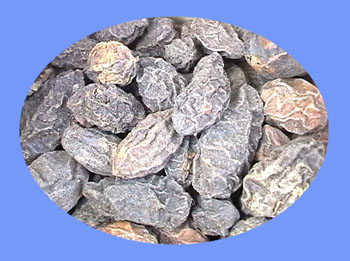
Chebula
Fructus
(he zi)
Fructus
Chebulae
Properties:
Bitter, sour and astringent in flavour, neutral in nature,
it is tropistic to the lung and large intestine channels.
Being bitter in flavour, it can send rebellious Qi down;
being sour and astringent, it can astringe the lung and
stop coughing. The unprocessed fruit is good at sending
down abnormally ascending Qi and clearing fire, and
relieving sore-throat and hoarseness, serving to treat Qi
chronic cough due to deficiency of the lung or cough with
hoarseness due to lung-heat. It also has action in
astringing the intestine to stop diarrhea and prolapse of
rectum.
Effects:
Astringing the lung to relieve cough, the bowels to stop
diarrhea, removing heat and easing the throat.
Indications:
1. In treatment of
protracted cough due to deficiency of the lung , it is
often used
with herbs for reinforcing the lung to stop coughing, such
as Radix Codononsis Pilosulae, Radix Astragali seu
Hedysari, Radix Ophiopogonis, Fructus Schisandrae, Semen
Armeniacae Amarum, etc. In treatment of cough due to
phlegm-fire, it is used with herbs for clearing heat and
resolving phlegm, such as Radix Scutellariae, Fructus
Trichosanthis, Bulbus Fritillariae, etc. To treat chronic
cough and hoarseness, it is used with Radix Platycodi and
Radix Glycyrrhizae to benefit the throat and recover the
voice.
2. For chronic
diarrhea and dysentery in the type of deficiency-cold of
the spleen and the kidney, it is used with herbs for
warming and recuperating the spleen and the kidney, such
as Radix Codonpsis Pilosulae, Rhizoma Atractylodis
Macrocephalae, Cortex Cinnamomi, etc. For chronic diarrhea
with concomitant gastrointestinal Qi-stagnation and heat,
it is used with herbs for promoting Qi and clearing heat,
such as Radix Aucklandiae, Rhizoma Coptidis, etc.
Dosage
and Administration: For astringing the lung, 3-10g of the unprepared herb
is used, and for astringing intestines, the roastedherb
used.
|
|
|
|
|
|
|
|
|
|
|